Short answer: After the storm passes, check from the ground and the attic, never from the roof. Look for missing or creased shingles, bits of shingle in the yard, bent flashing, loose gutters and fresh wet spots on the attic boards. If you find any of those, take photos and get an inspection before the next round of weather.
Nor'easters hit northern New Jersey most winters and often in early spring too. They bring hours of wind from one direction, heavy rain or wet snow, and gusts that test every weak shingle on the roof. Here's how to check your house when it's over.
First, stay safe
- Stay off the roof. Wet or icy shingles are slippery, and storm-damaged decking can be weak.
- Keep well away from any downed wires and report them to the utility.
- If a tree or large limb is on the house, keep people out of the rooms below it until it's assessed.
Walk around the house
Do a slow lap, ideally with binoculars or a phone camera zoomed in. Look at each slope of the roof and note:
- Missing shingles. Gaps where you can see the black underlayment or a lighter strip of older shingle.
- Creased or lifted shingles. A horizontal line across a shingle means the wind bent it back. Even if it lay down again, the seal is broken.
- Ridge caps. The shingles along the peak take the strongest wind. Check that they're all there.
- Pieces in the yard. Shingle fragments, drip edge or vent caps on the lawn are a giveaway.
- Flashing. Bent metal around the chimney, at walls or along the edges.
- Gutters and downspouts. Sections pulled loose, sagging or knocked off.
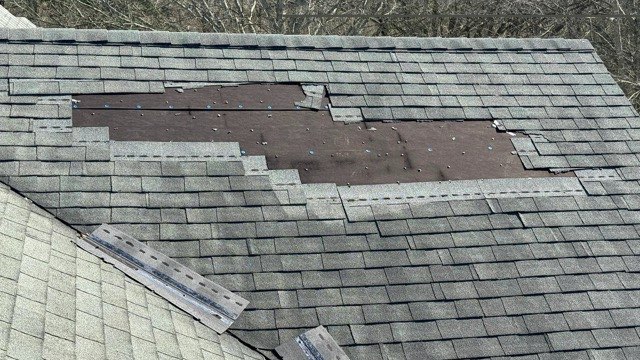
Pay extra attention to the side of the house that faced the wind. With a nor'easter that's usually the northeast and east slopes, though trees and nearby houses can change how wind hits a roof.
Check the attic
If you can safely get into the attic, take a flashlight up, especially during or right after rain. Look for:
- Wet or dark spots on the underside of the roof boards
- Damp or compressed insulation
- Daylight showing through anywhere it shouldn't
- Drips around vent pipes, the chimney or skylight openings
Water found up there now is water that won't reach your ceiling later. Mark the spot with tape so a roofer can find it quickly.
Check inside
Look at the ceilings on the top floor and along outside walls, especially below valleys and around the chimney. New stains, bubbling paint or a musty smell after a storm all point to a leak.
Document everything
If there's damage, take photos and short videos before anything is moved or fixed: wide shots of the house, close-ups of damage you can reach safely, debris in the yard and anything inside. Write down the date of the storm. Wind damage is often covered by homeowners insurance, and good records make a claim much easier. Wear and tear usually isn't covered, which is why the date and the photos matter.
When to call a roofer
- Any missing shingles, even a few
- Creased shingles across a section of roof
- Bent or loose flashing
- Any sign of water in the attic or on a ceiling
- A tree or limb that hit the roof, even if nothing looks broken
Small storm damage is usually a quick repair. Left alone, it lets more water in with every storm that follows. If water is getting in now, call us at (973) 218-5407 and we'll tarp it. Otherwise, send the details and we'll inspect and photograph everything. More on what we fix is on the roof repair page.
Need help with this in West Caldwell?
We'll take a look and give you a free written quote. Learn more about roof repair in West Caldwell.